
How to Reduce Online Exam Anxiety Naturally
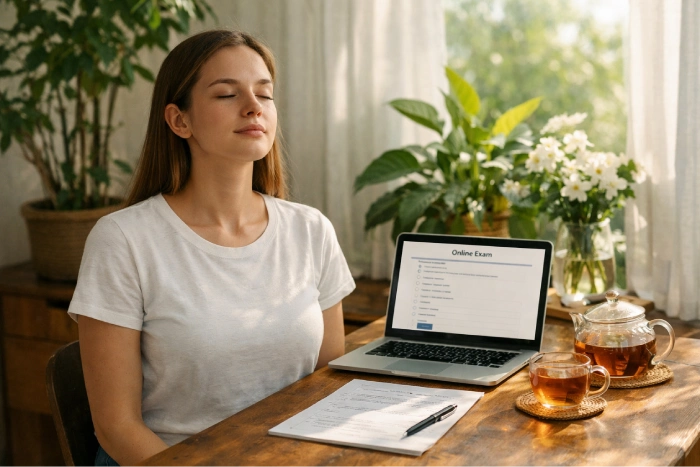
Online exam anxiety is common among students, and there are numerous pieces of advice on the internet that are practical as well as free. The biggest reason for online exam anxiety is that students fear being monitored behind the camera. The timer also adds to the pressure. This test anxiety in no way means that you are unprepared or unable to perform in the exam. You only need to reduce your anxiety around the online format elements. In this guide, we will tell you how to reduce your anxiety naturally. We will also cover what you need to do one week before, one night before, and also during the exam. You will also see the reason why students struggle with online exams.
Why Online Exams Feel Worse Than In-Person Ones
Online exam anxiety feels worse to students due to a number of reasons.
- The biggest cause is the proctored exam anxiety. When students know that they are being monitored behind the camera, they feel exposed, as their every move is being watched.
- The visible timer on the screen also creates continuous time pressure, which is not there in physical exams.
- There is also a fear of being wrongfully flagged. Even small noise or looking away for a few seconds can be flagged, and this creates stress on top of worrying about the exam content.
- There is also uncertainty about tech, such as students being worried that their connection might drop in the middle of the exam.
- There is also isolation. Students need shared experience with classmates before and after the exam in order to regulate stress, which is not given in online exams.
All of these proctored exam anxiety causes can be fixed. You can read about how online proctored exams work at Canadian universities, as this reduces the stress when you are already familiar with the exam process.
The Week Before: What Actually Lowers Anxiety
Here are a few techniques that you should follow one week before the exam to lower test anxiety.
Rehearse the conditions, not just the content: Before the exam, take one full-length practice test under timed conditions. Take it at the same time of the day as the test and on the same desk and computer setup. This is to make you familiar with the whole exam day routine and reduce the uncertainty around the exam.
Treat preparation as part of anxiety management: When you know you have fully prepared for the exam, it removes the anxiety of not knowing the questions. If you have not studied properly, then that fear will remain.
Keep moving regularly: Moving or taking walks can reduce physical tension and nerves in the body. You don’t need to do a proper workout to get the benefit of calmness of mind.
Protect your sleep throughout the week. Do not rely on the night before the exam to catch up. According to research, Poor sleep can affect attention and memory. This is why getting a full night’s sleep is important in order to stay attentive and focused while giving the exam.
Keep caffeine intake steady: Caffeine can raise your heart rate as well as cause jitters, which may look similar to anxiety. So, if you are prone to anxiety, then you should keep caffeine intake steady instead of consuming it too much.
Write down your worries before studying: You can write down your thoughts in order to clear your mind. Online exam anxiety lowers when the mental clutter is cleared.
The Night Before and the Morning of the Exam
- Stop studying the whole night before the exam: If you study the whole night before the exam, it can leave you tired the next day. For exam stress relief,you need to have enough rest.
- Prepare your environment in advance: Have a proper setup the night before so you don’t have to clear your desk, check the lighting or charge your devices a few minutes before the exam starts. If you wonder how to calm down before an exam, having a prepared environment is the first thing you should do.
- Prepare your essentials: In order to avoid scrambling in the morning, lay out your ID and other important materials on your desk.
- Eat something ordinary: Have a normal meal before the exam. Don’t try a new snack. If your blood sugar is low due to not eating, then it also mimics the symptoms of anxiety.
- Build in a time buffer: If you want another tip onhow to calm down before an exam, you need to log in early for the exam. This helps you avoid rushing and causing panic.
- Have a technical-failure plan. Preparing for technical failure, such as knowing who to contact and what the institution’s policy is, can save so much time and also reduce the fear.
Note that poor sleep does not mean that it is guaranteed that you will have poor exam performance, but it is better to be fully rested.
During the Exam: In-the-Moment Techniques
- Try slow-exhale breathing: If online exam anxiety rises during the test, then you need to do a slow breathing exercise.Breathe in through your nose and breathe out slowly. Do this for about a minute.Research on slow breathing and stress shows that controlled breathing can help the body relax.
- Ground yourself with your senses. Notice a few things you can feel, like your clothes, and things you can see, and focus on them. Redirecting your attention gets you out of the anxiety loop.
- Release physical tension. Unclench your jaw, drop your shoulders, and relax your hands. These small physical changes can lower the tension.
- Start with a question you can answer: Start the exam with a question you know very well, as this builds momentum.
- Reframe the physical sensations. Your body may be getting ready to concentrate and react if you have a quicker heartbeat or feel more awake. Some students may find it easier to control their test anxiety if they perceive these feelings as preparedness rather than danger.
- Use a time checkpoint instead of constantly watching the clock: Instead of looking at the clock every few minutes, you should only check the progress at certain checkpoints such as after completing 4 questions. Constantly checking the time increases anxiety.
If you freeze during the exam, pause briefly. Take a few deep breaths and follow the above breathing techniques for anxiety, which can help restore the momentum.
What About Supplements and “Natural Remedies”?
You could find herbal products advertised for stress relief if you want to reduce exam anxiety naturally. Use caution when choosing these alternatives. There are differences in the evidence, inconsistent product quality, and the possibility of product interactions with other medications.
Consult a pharmacist or physician before taking anything to alter your mood. Stick to basic routines for exam stress relief such as getting enough sleep, studying early, practicing under test settings, going for quick walks, and practicing breathing techniques. Without the need for a new product, these can help to reduce exam anxiety naturally.
Proctoring-Specific Anxiety
Proctored exam anxiety may result from uncertainty about what the system or proctor will observe. Being flagged does not always indicate that you have done something improper. Normal behaviours like turning away while thinking, shifting in your seat, or hearing a disturbance at home may have straightforward reasons, and a flag may be investigated.
By planning beforehand, you can lessen some of this anxiety. Read the exam guidelines, finish any practice or test runs that are offered, and arrange your space in accordance with the specifications. Online exam anxiety can be more easily controlled if you know what to anticipate.
Make early contact with the student services or accessibility office at your university if you require assistance during an exam. Read How Canadian Universities Maintain Fairness in Online Assessments.
When It’s Worth Talking to Someone
It is worth talking to someone or getting help for test anxiety if you feel anxious even outside exam periods or you have physical symptoms that interfere with your daily life. If you avoid the exams or classes, the anxiety will not lessen.
You can get campus counselling services as they are usually free and confidential for enrolled students. Reach out to a family doctor or national mental health support lines in Canada. You can check CMHA to find mental health resources.
Frequently Asked Questions
How do I calm down right before an online exam?
You can calm down by doing slow breathing exercises and preparing everything ahead of time.
Does exam anxiety mean I’m underprepared?
No. Exam anxiety does not mean you are unprepared. It means that you are worrying about proctoring and technical issues, which can be solved if you take care of them in advance.
Can I get accommodations for exam anxiety?
You can get accommodations by contacting your university or student service office early.
Do breathing exercises actually work?
Yes. Breathing exercise helps you relax and calm down.
Final Thought
For online exam anxiety, you need to take care of your sleep, do slow breathing exercises, and practice before the exam. If you need help, then seek support.